

Leadership
Led by the Chief of Police and Assistant Chief, with command staff overseeing patrol operations, supervision, and department programs.
Public Safety
Officers are expected to protect life, enforce the law, and serve the public with professionalism and sound judgment.
Professional Standards
Members are held to a higher standard of accountability, conduct, integrity, and responsibility.
Chain of Command
The Los Santos Police Department follows the chain of command below, from highest to lowest rank.Officers should follow the department’s chain of command whenever reasonably appropriate. Supervisory or command matters should generally be handled at the lowest appropriate level before being escalated further.
Rank Responsibilities
Chief of Police — High Command
Chief of Police — High Command
The Chief of Police is the highest-ranking official within the Los Santos Police Department.The Chief:
- Oversees all department operations
- Holds final authority over LSPD operations
- Works with administration and command staff
- Reviews major department policy and operational concerns
- Provides direction for the department as a whole
Assistant Chief of Police — High Command
Assistant Chief of Police — High Command
The Assistant Chief of Police is senior High Command and is responsible for department-wide oversight.The Assistant Chief supports the Chief of Police in:
- Department administration
- Command oversight
- Policy implementation
- Personnel concerns
- Operational consistency
Captain — High Command
Captain — High Command
Captains are senior command members responsible for overseeing major department operations.Captains may:
- Oversee large patrols
- Act as Watch Commanders
- Review supervisor performance
- Monitor subdivisions and department programs
- Coordinate between supervisors, lieutenants, and department administration
- Determine when an issue can be handled by command or should be escalated further
Lieutenant — Command
Lieutenant — Command
Lieutenants are the first rank within the Command Team.Lieutenants:
- Oversee Sergeants and Corporals
- Serve in Watch Command positions
- Perform routine subdivision oversight
- Coordinate with Captains and Administration
- Provide input on department policy and operational changes
- Assist with department-wide supervision and organization
Sergeant — Shift Overwatch
Sergeant — Shift Overwatch
Sergeants are established department supervisors.Sergeants commonly:
- Mentor Corporals
- Recommend qualified Corporals for advancement
- Supervise patrol operations
- Assume Scene Command when appropriate
- Assign units to duties, districts, or operational needs
- Supervise or help lead subdivisions and department programs
Corporal — Supervisor
Corporal — Supervisor
Corporals are the first supervisory rank within the department and serve as Supervisors in Training.Corporals are mentored by Sergeants in areas such as:
- Disciplinary procedures
- Supervision techniques
- Scene management
- Personnel guidance
- Department leadership
Detective — Investigations Bureau
Detective — Investigations Bureau
Detectives are members of the Investigation Bureau.Detectives may be assigned to:
- Homicides
- Major criminal investigations
- High-profile cases
- Evidence-driven investigations
- Other investigative matters requiring specialized follow-up
Senior Officer
Senior Officer
Senior Officers are veteran officers who have distinguished themselves through experience, performance, and reliability.Senior Officers may:
- Assist subdivision supervisors
- Mentor less-experienced officers
- Take initiative during scenes when a supervisor is unavailable
- Assist with department programs and operations
Officer III, Officer II & Officer I
Officer III, Officer II & Officer I
Police Officers perform the core day-to-day responsibilities of the department.Typical duties include:
- Patrol
- Traffic enforcement
- Responding to emergency calls
- Investigations
- Arrests
- Report writing
- Community interaction
Cadet / Probationary Officer
Cadet / Probationary Officer
Cadets and Probationary Officers are newly trained members of the department who are still developing their experience.They are commonly accompanied or supervised by:
- Veteran officers
- Police Officers
- Field Training Officers
- Department supervisors
Chief’s Office
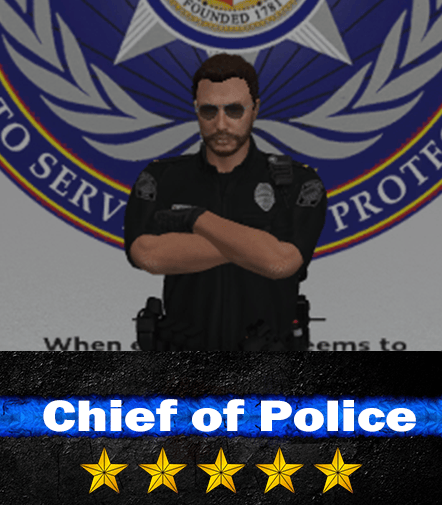
Chief of Police — Skylar Breeze
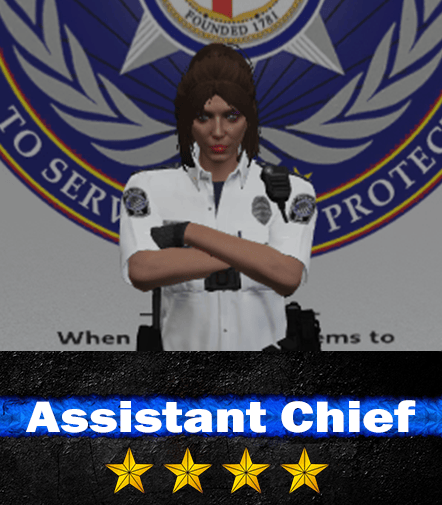
Assistant Chief of Police — Caitlyn Hall
Department Principles
Quality Through Continuous Improvement
The department strives for the highest quality possible in all aspects of its duties by continuously improving its people, practices, and performance.Members of the Department of Public Safety are expected to hold themselves to a higher standard of quality and professionalism.
Life Over Poverty
The preservation of life is of the utmost importance.Officers should protect life whenever reasonably possible while still enforcing the law — including the lives of suspects and other involved parties.
Code of Ethics
As a Law Enforcement Officer, each member is entrusted with authority and responsibility by department leadership and the public they serve. That trust requires members to maintain a high standard of professional conduct.Members are expected to enforce the law fairly, act with honesty and integrity, use sound judgment, remain accountable for their actions, and protect the rights of the people they serve.
- Enforce the law fairly and lawfully.
Administer and enforce the law in accordance with applicable constitutional principles and laws of the State of San Andreas. - Protect due process and equal treatment.
Ensure members of the public receive fair treatment and appropriate legal protections. - Maintain professional standards.
Demonstrate conduct consistent with the responsibilities, duties, and obligations of a law enforcement officer. - Act with honesty and integrity.
Maintain a standard of honesty and personal integrity worthy of the trust placed in law enforcement. - Remain accountable.
Accept responsibility for people, property, equipment, and decisions entrusted to your care. - Exercise discretion and sound judgment.
Make reasonable decisions based on the circumstances, department policy, training, and the law. - Accept the responsibilities of the position.
Understand that holding law-enforcement authority carries additional duties, expectations, and accountability.
Expectations of DPS Employees
All Department of Public Safety employees are expected to:- Perform their assigned duties responsibly
- Be accountable to supervisors and the public they serve
- Understand the laws, rules, and policies relevant to their position
- Strive for continued individual improvement
- Identify and respond appropriately to problems within their duties
- Support crime reduction and traffic safety
- Build productive relationships with the community
- Improve their technical knowledge, training, and education
Department of Public Safety Goals
The Department of Public Safety and its members should continually work toward the following goals:1
Provide Quality Public Service
Provide high-quality service that earns the respect and confidence of the citizens of San Andreas.
2
Serve With Professionalism
Provide public service with empathy, integrity, professionalism, and individual attention.
3
Improve Public Safety
Identify areas where public safety, traffic safety, crime reduction, and community service can be improved.
4
Lead Through Accountability
Exercise responsibility and accountability while working toward the department’s mission.
5
Treat People Fairly
Treat citizens and fellow employees fairly and equitably.
6
Use Resources Responsibly
Manage department resources effectively and focus efforts where they will have the greatest impact.
7
Use Technology Effectively
Utilize available technology, training, and tools to support department personnel and the public they serve.
Members of the DPS are expected to act as both leaders and public servants. The decisions made today shape the department’s reputation and future.
Personnel Contact Information
Use the contact information below when an in-character matter needs to be directed to department leadership.- Skylar Breeze
- Caitlyn Hall
- Samuel Blackwood
Chief of PolicePhone: (995) 456-9485